Click covers for info. Copyright (C) Rudy Rucker 2021.


Archive for the ‘Rudy’s Blog’ Category

Fractalmania! With a T-Shirt!

Thursday, May 6th, 2010

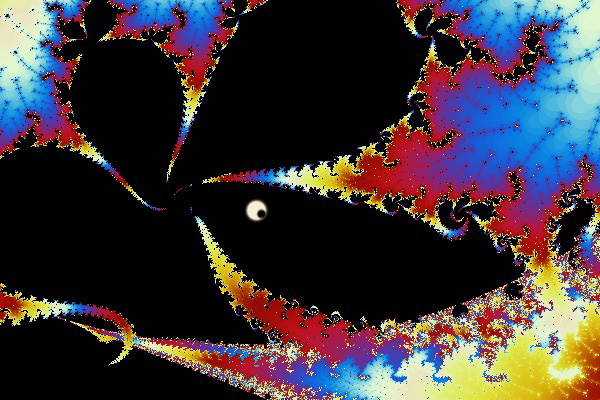
I saw a Mandelbrot set in the sky the other day, and painted a picture called “He Sees the Fnoor.” I ended up using this painting in the banner image for my new Zazzle T-shirt site…but more on that below.

The current augmentation of my obsession began with me printing out big images of the new fractals I’ve been working with. Full info is at my Rudy Set post, which now has a short-cut address tinyurl.com/rudyfractals.

I’ll be selling some of these prints at the closing party for my art show, to be accompanied by readings with author Michael Shea. It’ll be on on Saturday, May 22, from 6-10 PM, you can find more info in my original post about the show.

And you can also buy high quality prints online at my new Ultrafractals gallery at rudy.imagekind.com. I’d suggest getting them on one of the glossier papers on offer there.

Seek the Gnarl shirt
Seek the Gnarl from “Rudy’s Gnarl”

And, fittingly—thanks to a suggestion from my reader “Failrate”—I’m putting some of my fractals on t-shirts and stuff like that. Fractals kind of belong on T-shirts, right? So here’s a kickin’ shirt on Zazzle, with the Cubic WhoopDiDoo on the front and the Sanskrit Mandlebud on the back. And Zazzle lets you, the potential buyer, customize the type of shirt, the size, and so on. Yeah, baby!

I’ve started dreaming about fractals every night, and I see them when I close my eyes. So far, this seems good.

“Holy Fractal, Mother of Life, pray for us now and and at the hour of our termination, Amen.”

SF and Quantum Mechanics, #1

Monday, May 3rd, 2010

Some comments by Ted Chiang, Benjamin Rosenbaum, Nathaniel Hellerstein and others in my recent post on “True Names and Fnoor” got me to thinking about the relationships between science fiction and quantum mechanics. This is a big topic, so I’m going to break it up into two or possibly more posts.

First, a throwaway remark—a chemist friend of mine once remarked that it would be entertaining if fundamentalist religious types got into attacking quantum mechanics. They’re always just hammering way on evolution, I guess because it’s fairly easy to (sort of) understand. Certainly there are some things in QM that might stoke someone’s ire. If the Lord knows all things, how dare scientists assert that the universe is in any respect Uncertain?

Do keep in mind that QM does have its good side. One key point, which Ted hinted at, is that the very stability of matter seems to depend upon QM. I’m thinking here of the notion of there being minimum amounts of energy (quanta) by which a system can change. Consider an electron orbiting a proton—a hydrogen atom, in other words. If energy weren’t quantized, the electron would gradually spiral in to the proton, and the atom would collapse. But, as things stand, an undisturbed hydrogen atom is very unlikely to pulse out the full quantum of energy necessary for a collapse. In some sense, QM acts as a set of struts to prop up our atoms.


[RudyParticleBeam. Dig this yottawatt particle beam projector that I found inside the Rudy Set this week. All digital, all deterministic. If you have a fat pipe and want to appreciate the true freakin’ weirdness of this mathematical object (based on the seemingly innocent notion of cubing a complex number) here’s a 4 Meg image of RudyParticleBeamthat’s 3000 pixels wide. Get in there and wallow in it, dog. ]

But for an SF writer, there are a number of things about QM that are provocative. I have six little subpost sections in mind; I’ll cover the first three of them today and the last three in a follow-up post.

(1) Under the Quantum Foam: Does space break down at a small enough scale?
(2) Many Universes? Some think that QM supports a multiverse in which our universe is only one of an endless set of variations.
(3) Yes and No. The QM notion of superposed states says that systems (like the famous Schrödinger’s Dead Horse…I mean Cat) can be in several seemingly exclusive states at the same time.
(4) The Secret Theory. Can there be hidden variables and a deterministic theory at a deeper level than QM?
(5) QM Teep. The QM notion of entanglement says that distant particles’ states are in some instantaneous way correlated.
(6) Everything’s Alive. Quantum computation indicates that any piece of matter can be regarded as a supercomputer, potentially cabable of carrying out intelligent-seeming computations.

1. Under the Quantum Foam.

The notion of quantum graininess spills over from energy and into space and time. One often hears talk of the so-called Planck length, which is about 0.000 000 000 000 000 000 000 000 000 000 000 001 616 meters, or a hundred-quintillionth the size of a proton. This particular distance pops out of the mathematics of QM. There’s a common feeling that the whole notion of space might not work anymore at the Planck length size scale—you often hear the phrase “quantum foam” (scroll to the end of this page, for instance).

What’s not to like about quantum foam? Well, you can of course capitalize on it, and blend it into your story. I don’t think I’ve seen enough stories like that. The physicist George Gamow made some popular attempts at this kind of thing in his beloved Mr. Tompkins books, here’s an excerpt of one. In my own novel, Master of Space and Time, the gimmick that I used for giving my characters a fleeting ability to control the universe was to locally (in the vicinity of their heads) expand the Planck length into a one-meter length.——

But if you’re interested in having some kind of “scale ship” that lets people shrink down endlessly into the microverse, then the foam is a problem. I wrote a novel about this, too, Spacetime Donuts—in this book, I pretty much punted on the problem with QM and just glossed it over. My characters shrank all the way down to the smallest possible level and, gloryoski!, the smallest level was the same as the largest, so they ended up shrinking down to find the same Earth they’d left from. Very Golden Age.


[Interlude: This is my recent painting, “First Contact,” oil, 40” by 30”. More info on my paintings page.]

A few years ago, I found a heartening passage in Michio Kakau, Parallel Worlds, where Kakau discusses a 1984 theory of “string duality” ascribed to Keiji Kikkawa and Masami Yamasaki. String duality theory also allows for interesting physics below the Planck length. The Planck length becomes something like an interface between two worlds. As Kakau puts it:

“Let’s say we take a string theory and wrap up one dimension into a circle of radius R. Then we take another string and wrap up one dimension into a circle of radius 1/R. By comparing these two quite different theories, we find that they are exactly the same. Now let R become extremely small, much smaller than the Planck length. This means that the physics within the Planck length is identical to the physics outside the Planck length. At the Planck length, spacetime may become lumpy and foamy, but the physics inside the Planck length and the physics at very large distances can be smooth and are in fact identical.”

I decided to start using the word “subdimensional” for the cosmos that lies “inside the Planck length.” It’s kind of a Golden Age term of uncertain meaning, but I started using it in the sense of string duality theory (without saying so) in my Flurb story with Paul DiFilippo, “Elves of the Subdimensions.” I also used this idea in my Tor.com story, “Jack and the Aktuals.” And I used the subdimensional world in my novels Postsingular and Hylozoic—here there are some nasty beings called subbies living down there. I put it like this Postsingular.

“Did you guys see that weird ocean when you came across?” Thuy asked Ond.

“I think it’s the Planck frontier,” said Ond. “Physics at the scales smaller than the Planck length is supposed to be identical to physics at the scales larger than the Planck length. So then the Planck length is a frontier between dual versions of the cosmos. And if someone shrinks down into the dimensions under the foamy frontier, they’ll feel like they’re expanding into a whole alternate cosmos hidden in the subdimensions. There’s a world under that ocean.”

“A subdimensional world,” said Chu. “We’re heard the Hibraners taking about it. They call it Subdee. And those bird-headed men we saw were subbies. Subbies from Subdee.”

2. Many Universes?

In the essay on infinity, “Avatars of the Tortoise,” that appears in his collection Labyrinths, Jorge Luis Borges writes, “This is a concept which corrupts and upsets all others. I refer not to Evil, whose limited realm is that of ethics; I refer to the infinite.”

To my way of thinking, Borges dictum is equally true of “the multiverse.” I don’t think I’ve ever seen¬ an SF novel or story the full quantum-mechanical multiverse with complete success. What tends to happen in these tales is that the character moves along some sequence A1 of events until *wham* something’s about to kill him or her and then *hop* the character jumps over to a sequence A2 of events where all is well.

My problem with this is that the narrative then is a kind of cheating. There’s no essential connection between A1 and A2, that is, there is no causal connection between these two. They’re two independent histories, and it’s wishful thinking to pretend that there is some higher-level metacharacter who is able to move from the one to the other. I discuss this in more detail with reference to Neal Stephenson’s excellent novel Anathem, in my post, “Narratives in the Multiverse.”

Let me back up a bit. What QM have to do with the multiverse anyway? Although there is no QM axiom or principle that explicitly decrees randomness, the conventional belief is that many primitive events (such as the decay of a radioactive atom) do in fact happen randomly. (One reason this isn’t an axiom is because the precise meaning of “random” is, in a Goedelian and metamathematical sense, impossible to define.)

IN any case, many of us would like to suppose that our reality is in no sense random, and that things don’t happen for no reason at all. A sloppy way to account for the seeming randomness of low-level quantum events seem to be random is to insist that the timeline of our universe is continually branching, and that, for lack of a better reason to go one way or the other, both outcomes result from any up-or-down measurement. And the universe splits, and a copy of you goes into each universe

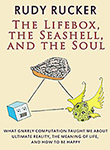
I think this is a terrible idea. As I write in my tome, The Lifebox, the Seashell, and the Soul:

“Many people find the multiverse model philosophically unsatisfying. It’s hard to put one’s finger on the problem, but I think it has to do with meaning. One likes to imagine the world has an ultimate explanation of some kind. Call it what you will: the Secret of Life, God’s Plan, the Theory of Everything, the Big Aha, whatever. If we live in a multiverse of many universes, then perhaps the multiverse has a Multiversal Big Aha, but a mere individual universe doesn’t get a Big Aha. An individual universe is simply the result of an incalculable number of coin flips. To me, this feels inane and defeatist. Our beautiful universe deserves a better explanation than that. Although the multiverse model is in fact useful for understanding certain kinds of quantum phenomena, it’s not attractive as a final answer.”

Note that QM does not require us to have a multiverse. We can instead accept that systems enter superposed mixtures of “both up and down” states, and that the process of observation precipitates such a system (randomly?) into one particualr pure state.

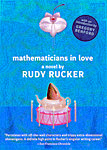
A few more words on alternate worlds. What I do think to be feasible for an SF story is to work with some limited number of branes, or alternate universes, and to have characters moving from one brane to the other. When they move they might possibly encounter alternate copies of themselves, although it’s often convenient to eliminate the alternate self in some fashion (that is, either the alternate is dead, or perhaps the alternate has left for yet another brane). I used this technique in my novel Mathematicians in Love—here there is a jellyfish-like “God” who creates a new “draft” of our universe on every Friday, and my main characters manage to hop to a sequence of maybe three alternate drafts.

A different idea about multiple universes or branching time is implicit in the notion of “precogs,” that is, psychically gifted people who can continually select the optimal thing to do next. I think the very first Phil Dick story I ever read was a fine exemplar of this: “The Golden Man,” about a guy who is unkillable because he always knows to zig when you zag.

To do this right we want to avoid assuming all the futures are real—because, once again, if all the futures are real, then it means nothing to claim that someone always picks the right path because he or she is continually picking every path. This claim is as spurious as a stock broker ad that shows a protracted series of different people making money on stocks…and which tries to pretend that all those people are one and the same person…who could be you, ’cause you’re Younique!

To some extent we do look into possible futures—that’s what reasoning and imagining scenarios is all about. But to give it an SF twist, let’s suppose that, although our timeline doesn’t fully branch, it does very commonly grow out stubs that are some fractions of a second long. If the one undivided history of our one world doesn’t enter a stub, then it withers and snaps off . Or you might say that the history might even go a little way into a bad branch but then somehow back up like a car out of a dead-end alleyway, and head back on the “proper” branch. The backups are very common, in fact they’re all but ubiquitous.

Most people don’t notice this, as when time backs up, events run backwards and memories get erased. But our Golden Man or Woman does learn to notice. And you need to put some thought into what happens when A and B stand at a crossroads and differ about which is to be the path taken.


[Another recent painting by me, “Werewolf,” oil, 20” by 16”]

3. Yes and No

QM famously says that, left on their own, systems evolve into so-called superposed states which are a mixture of classically different states. But when an “observer” examines a system it quick-as-a-flash “collapses” into being some pure, non-mixed, non-superposed state.

Another pair of words used here are coherent and decoherent, taken in a technical QM sense where “coherent” means a mixed or superposed state, and “decoherent” is a prissy, flattened-out, one-thing-and-one-thing-only pure state.

The notion of “coherent,” “superposed,” or “mixed” states is one of things that seems superficially very remote from ordinary life. But, if you ponder it, you may come to see that in some respects our minds are very often in superposed states. Do I like this meal? Well, until you insisted on an answer, I didn’t have a real opinion about it…

Here’s a quote from a thought-provoking article by Nick Herbert called “Quantum Tantra”. He’s leading up to a proposal that our mind is, as I’m hinting, very much like a quantum system that naturally evolves into superposed states.

“By the high standards of explanation we have come to demand in physics and other sciences, we do not even possess a bad theory of consciousness, let alone a good one. Speculations concerning the origin of inner experience in humans and other beings have been few, vague and superficial. They include the notion that mind is an ”˜emergent property’ of active neuronal nets, or that mind is the ”˜software’ that manages the brain’s unconscious ”˜hardware’… Half-baked attempts to explain consciousness, such as mind-as-software or mind-as-emergent-property do not take themselves seriously enough to confront the experimental facts, our most intimate data base, namely how mind itself feels from the inside.”

Nick proposes that we think of the human mind as a quantum system. Recall that quantum systems are said to change in two ways: when left alone, they undergo a continuous, deterministic transformation though a series of superposed states, but when observed, they undergo abrupt probabilistic transitions into pure, classical states. Nick suggests that we can notice these two kinds of processes in our own minds.

(Coherent) The continuous evolution of quantum superpositions corresponds to the transcendent sensation of being merged with the world, or, putting it less portentously, to the everyday activity of being alert without consciously thinking much of anything. In this mode you aren’t deliberately watching or evaluating your thoughts.

(Decoherent) The abrupt transition from mixed state to pure state can be seen as the act of adopting a specific opinion or plan. Each type of question or measurement of mental state enforces a choice among the question’s own implicit set of possible answers. Even beginning to consider a question initiates a delimiting process.

[This discussion of Nick’s idea is drawn from The Lifebox, the Seashell, and the Soul. And I also talked about this in a 2005 blog post.]


[Image of RudySplitBrain, see the Rudy Set post for details about how to do this to your own head at home. I have to mention that my recent, and still ongoing, relapse into fractal-mania is getting into my dreams—last night I was wading at a seaweed-filled ocean beach, and the stuff in the water was high-order fractals beyond gnarl. And this is a good thing.]

I’ll get into a discussion of hidden variables as, (4) The Secret Order, of entanglement as (5) QM Teep , and of quantum computaion as (6) Everything’s Alive. — in a later post, to be called “SF and Quantum Mechanics #2.”

Fnoor Everywhere

Friday, April 30th, 2010

A week or two ago, I did a post called “True Names and Fnoor,” and, thanks in part to the good comments, I’ve been thinking about the notion of fnoor some more.


Is the purple jelly shoe by that little chair a piece of fnoor?

Again, I’m using “fnoor” to mean “some odd aspect of a person’s world that leads a person to suspect that there is more to this world that he or she had imagined.” The fnoor might indicate that the world is in fact a virtual reality. Or the fnoor might suggest that there are holes in the world leading to other realities. Or the fnoor might indicate that there are numerous simultaneously active levels of reality. “Something is happening here, but you don’t know what it is—Do you Mister Jones?”


Crawlin’ Lichen.

In the blog post mentioned above, I sketched some ideas for a story with the working title, “Fnoor,” but my ideas for the story are still expanding and taking on new shapes. I won’t try and describe the new details of what I’m planning, but I will put down some antic thoughts about fnoor that I’ve been having.


RudySanskritBud in the Rudy set.

Certainly, a natural place to look for fnoor is in deep zooms of heretofore unexplored computer fractals, such as the Rudy set (based on cubic Mandelbrot sets). I found the Sanskrit Bud inside a glob of the RudyRockets image last week, and it fully boggles my mind. What I like especially here is that it has the look of a sacred mandala with Sanskrit ideograms written around it.


Nature’s fnoor is a dewdrop in a spiral.

If one person can find the fnoor with a computer program, another person should be able to perceive it via meditation.


Who actually writes these things?

A wholly different notion of fnoor in fiction is used in Pynchon’s Crying of Lot 49-—where the fnoor emerges as signs seen on the street, or on bathroom walls. The signs tell the alert eye that there is indeed another order to reality.


Aha!

Going overboard on this into fully paranoid schizophrenia, you can start seeing messages everywhere and—for the purposes of an SF story in any case—who’s to say your wrong. Is it really a “coincidence” that the dregs in this coffee cup are the same beige as the paint on this quotidien street fixture whose purpose is—what?


Goin’ to heaven…

What if somehow you could break free of your enslavement to the laws of perspective and their insistence that if somethin is small, then it’s far away. What if his ladder did in fact lead directly to the phone pole? Plug into that terabyte cable and hear the Voice of the Sky.


Mon ami Alexandre.

Crooked, warped, unexpected—the fnoor wants to take you someplace new. Imagine finding a heretofore unknown neighborhood of San Francisco called Fnoortown, where you can buy a 20,000 sq. ft. house for $100! There’s plenty of room for everyone, as the houses are the size of atoms or maybe even smaller than that—maybe down below the bogus curtain of the Planck-length limit.


Right this way.

Follow me, baby, it’s just around the before-ner. Everyone’s waiting for you, and the fnoor is fine.

RudyHedgehog, see theRudy set post for explanations, where you can download the params from UltraFractal.

And click here for a humongo 3 Meg RudyHedgehog you can get lost in. One unreliable narrator describes it thus:

It showed a shape like a sea-urchin, with a curlicue dangling down towards it. Endless parades of pastel elephants were marching into the slits between the sea-urchin spikes. St. Elmo’s Fire masts swept up into the terraced space between the urchin and the curlicue.

Is Jaron a Cephalopod?

Monday, April 26th, 2010

I got to know Jaron Lanier a little bit in the 1990s, when Virtual Reality was becoming a craze. Jaron was one of the very first people to talk about VR—see his April, 2001, Scientific American article, “Virtually There.” By the mid 1990s, his company VPL Research was making one of the first “Data Glove” devices, and the Advanced Technology group at Autodesk was using these gloves for their so-called Cyberspace project.

I was working at Autodesk at this time, writing some demos for the Cyberspace platform, so I’d see Jaron from time to time, and I found him very interesting. Once he remarked that his motivation for working on VR was because he dreamed of having a really good air-guitar, one which could in fact morph into arbitrary instruments. And then, being Jaron, he went ahead and made an album this way, The Sound of One Hand. And here, on the same theme is a link with some playable tracks from his latest album, “Proof of Consciousness“.

In person, Jaron makes an odd impression. Like other programmers and mathematicians I’ve known, he incorporates a mix of being very well-informed about certain things, while being unaware of some topics that the average human might know. And—extra wild card—he’s a musician as well.

In the last section of his latest book Jaron hints that he seems odd because he’s an alien cephalopod—“More than one student has pointed out that with my hair as it is, I am looking more and more like a cephalopod as time goes by.” The truth is coming out! But maybe I’m overinterpreting! I do love cuttlefish a lot…I pretty much try and work one into every novel that I write…

The book I’m talking about is You Are Not a Gadget. He’s trying to put his finger on some things that might keep the Web from being as wonderful as we’d like it to be. Cephalopod or not, Jaron does a good job of promoting his work, see his recent interview on “The Wisdom of the Hive” in Scientific American, and many more pages and links on his book site.

One point Jaron makes is that group-written sites like Wikipedia aren’t necessarily as good as we think they are. I gather that he was in part drawn into making this critique by some problems he had with his own entry in Wikipedia. I know this feeling—it’s frustrating if anonymous strangers post “official reference information” about you which strike you as factually incorrect. Personal issues aside, you’ll notice that if you read a Wikipedia entry on some topic about which you’re very well-informed, you’ll often find that the posted information includes subtle errors and biases. In principle, you set about trying to correct the entries, but at some point this becomes a waste of energy. If you’re truly an expert on something, it’s more satisfying to make your own independent web page about it.

Jaron argues that the very anonymity of the Wikipedia contributors can serve to conceal the contexts from which their speaking. He makes the point that, if you take the time, you can often find better, more grounded information by looking a little further down into the list of hits that Google returns when you search for a topic. Even so, for casual use, it really is very pleasant to have Wikipedia around, with the information being presented in an encyclopedia’s uniform format.

But a lot of crowd-sourced pages really seem like crap, cf. the growing number of Web 2.0 “answer” sites, where people post answers to questions, and other people vote on which answers they like best. Ask any question in the Google search bar and you’ll see five or more sites like this. It’s like, “We want an advice website, but we’re not going to pay anyone to write the advice, we’ll let it emerge, and we’ll make money from ads.” Sometimes this works, but often it doesn’t. My guess is that the wiki format, in which people can revise each other’s posts is more likely to converge on something useful—with the caveat that you then have the anonymity and lack of context.

You can preview some of Jaron’s thoughts on crowd-thought in his essay, “Digital Maoism: The Hazards of the New Online Collectivism.”

I’ll mention one other issue that Jaron raises—a topic that hits very close to home for an author or a musician. It’s really not sustainable to expect for people to be able to read and hear everything out there for free. Some have argued that, even if you give away your creative work on the Web, you can still earn money by value-added activities like selling T-shirts or making personal appearances.

But if you’re a creative type, you don’t necessarily want to be rushing around trying to scrounge up small-money deals. It’s too much like panhandling, or having to “sing for your supper” as Jaron puts it. You’d like to be able to create something in undisturbed privacy, put it out there, and gradually get remunerated as people access your work.

A very few authors and musicians do give away their work online and do fine with their careers. In SF circles, Corey Doctorow is the canonical example of someone who gives away electronic versions of his work while managing to sell plenty of paper copies. I myself have toyed with this approach, putting my novel Postsingular up for free download at the same time that it appeared in paper. In my case, I didn’t see this as significantly helping or hurting the sales of the book, although possibly it hurt sales a bit, or maybe it did help, as Hylozoic, which wasn’t posted for free download, sold a bit less. Writers want to be read, so at some level we do like giving away electronic books, and I probably would have given Hylozoic away as well, but my publisher didn’t want me to do it, they had some hopes of making money with Kindle and ebook sales.

It’s always hard to tell about these things, because we only get to live in one universe. At this point, there’s still very very little money in ebook sales for people other than, say, Stephen King or authors of (The)+(Proper noun)+(Noun) books, so the issue of free electronic books is somewhat moot. But now, as the ebook market keeps edging towards picking up, I think many writers and publishers feel more resistance about giving away their electronic books for free. The situation is different for musicians as the preferred form for music distribution is now electronic. The dilemma comes up for artists, too—some of us like to sell prints of our works online, and for that reason we don’t make hi-res images of our work freely availalble.


[MandelQuinticMosquitoes, detail of a quintic Mandelbrot Set.]

Jaron advocates a very nice solution to the problem that was proposed by Ted Nelson many years ago: this is that there be, in effect, only “one” copy of each artistic creation on the Web, and that whenever anyone access this copy, their browser automatically makes a smallish micropayment to the author. In practice there wouldn’t literally be only one copy of, say, a photo, a song, or a book—but it would be possible to make the system seem to behave as if this were in fact the case.

As things now stand, artists now seem fated to be selling our out-of-print or more obscure creations through things like Google Books or iTunes. These “Lords of the Cloud” (as Jaron calls them) collect the viewing fees and the revenue from sidebar ads and pass on whatever cut they deem reasonable to the actual authors. But why do we need Lords of the Cloud? An iron-clad, possibly government-backed, micropayment system would be cleaner, more open, and more fair.

Though maybe we don’t want the government, per se, involved. But, as Jaron also points out, it’s kind of crappy the way that the main, inviolable thing on so many web pages is ADs, ever more personalized, ever more intrusive and easy-to-mistake-for-something-real.

One more remark about cephalopods like octopi and cuttlefish. Jaron argues that their brains might in fact be comparable to ours, but they don’t get to have a childhood during which their elders teach them things. The edge that they do have is that, with their intensely variable skins, they are in some sense born masters of virtual reality. Jaron encapsulates these thoughts in an equation:

Cephalopods + Childhood = Humans + Virtual Reality.

Or, to quote the title of the great Talking Heads movie: “Stop Making Sense.” You go, Jaron! Lead the fight against bland consensus reality.


Rudy's Blog is powered by WordPress